
Art | AI | Human Consciousness
Creating meaningful human experiences in the age of intelligence.
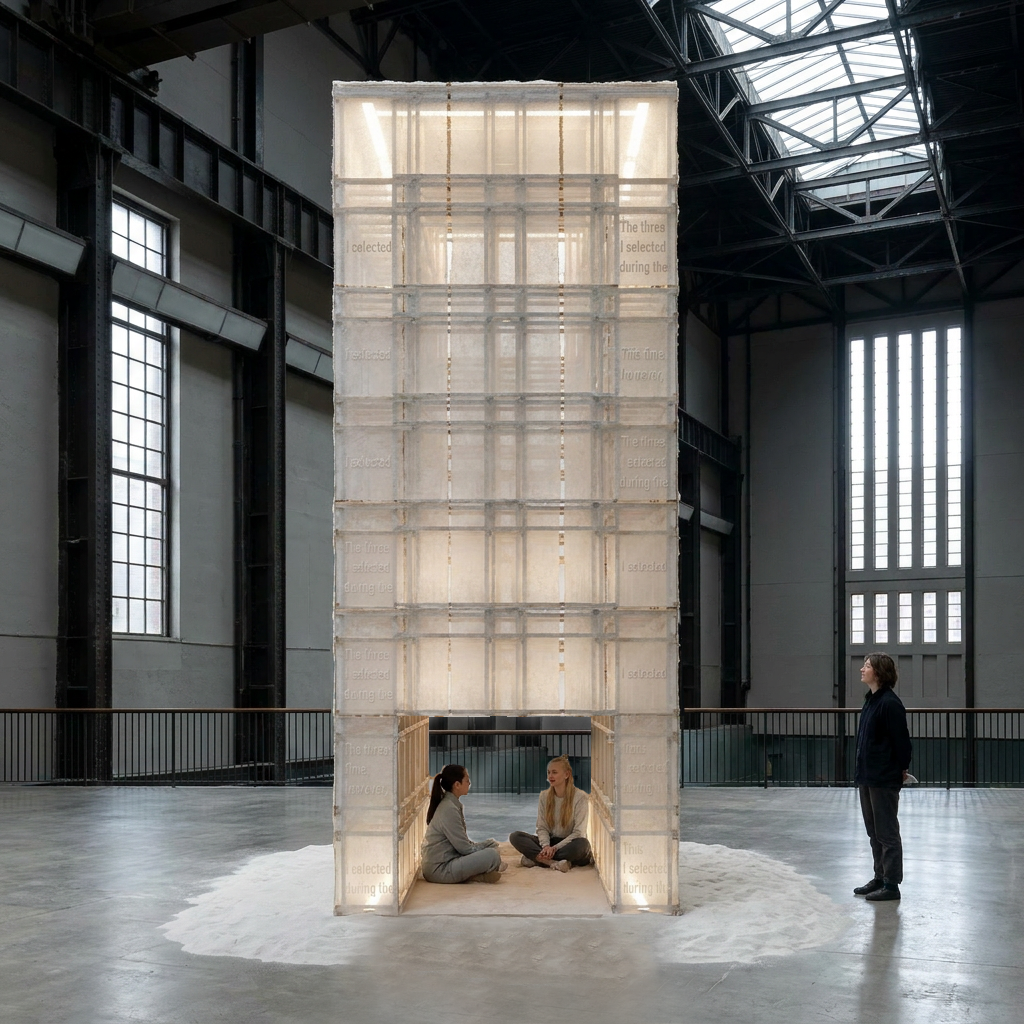
SPACE for 2
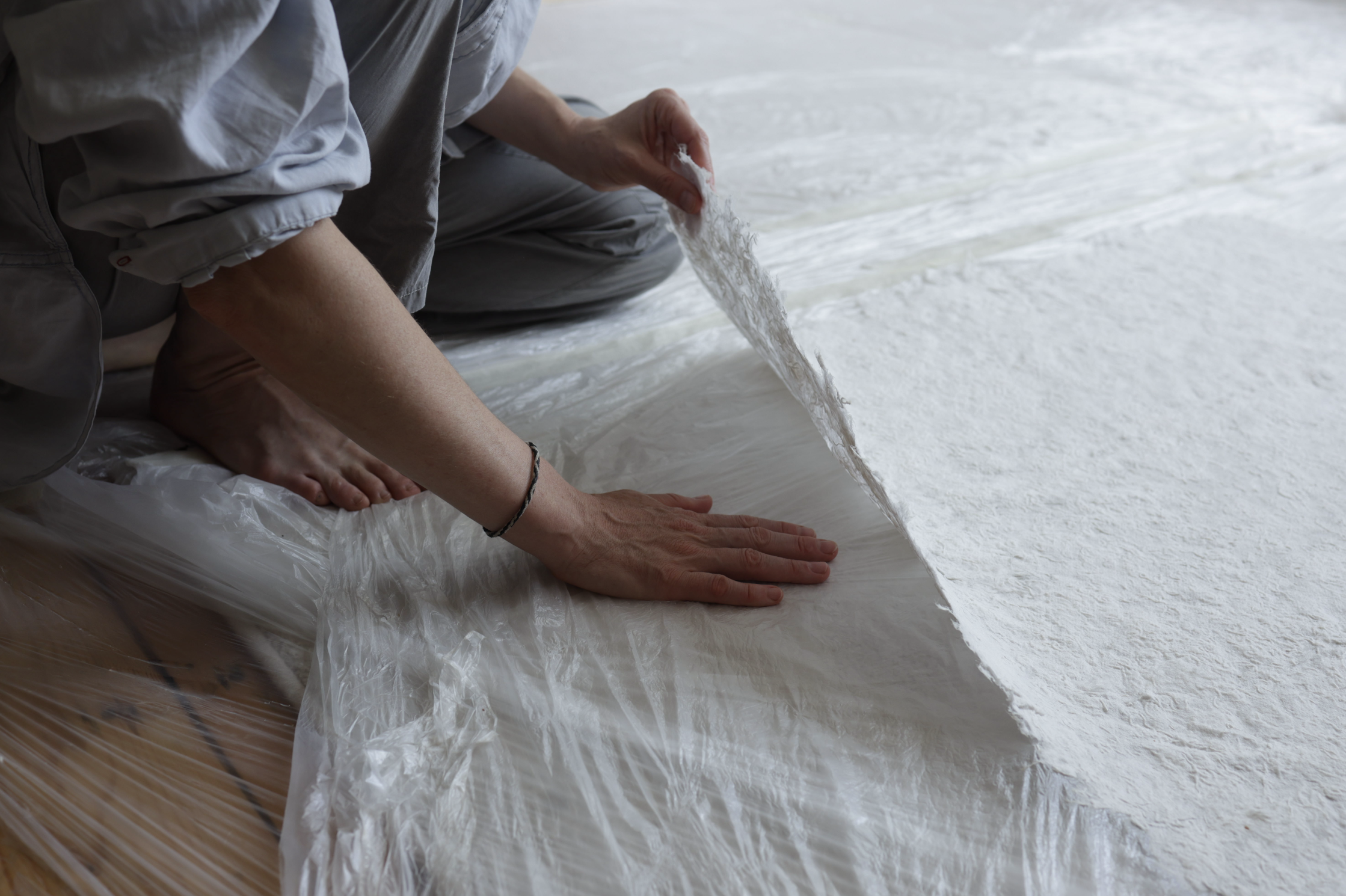
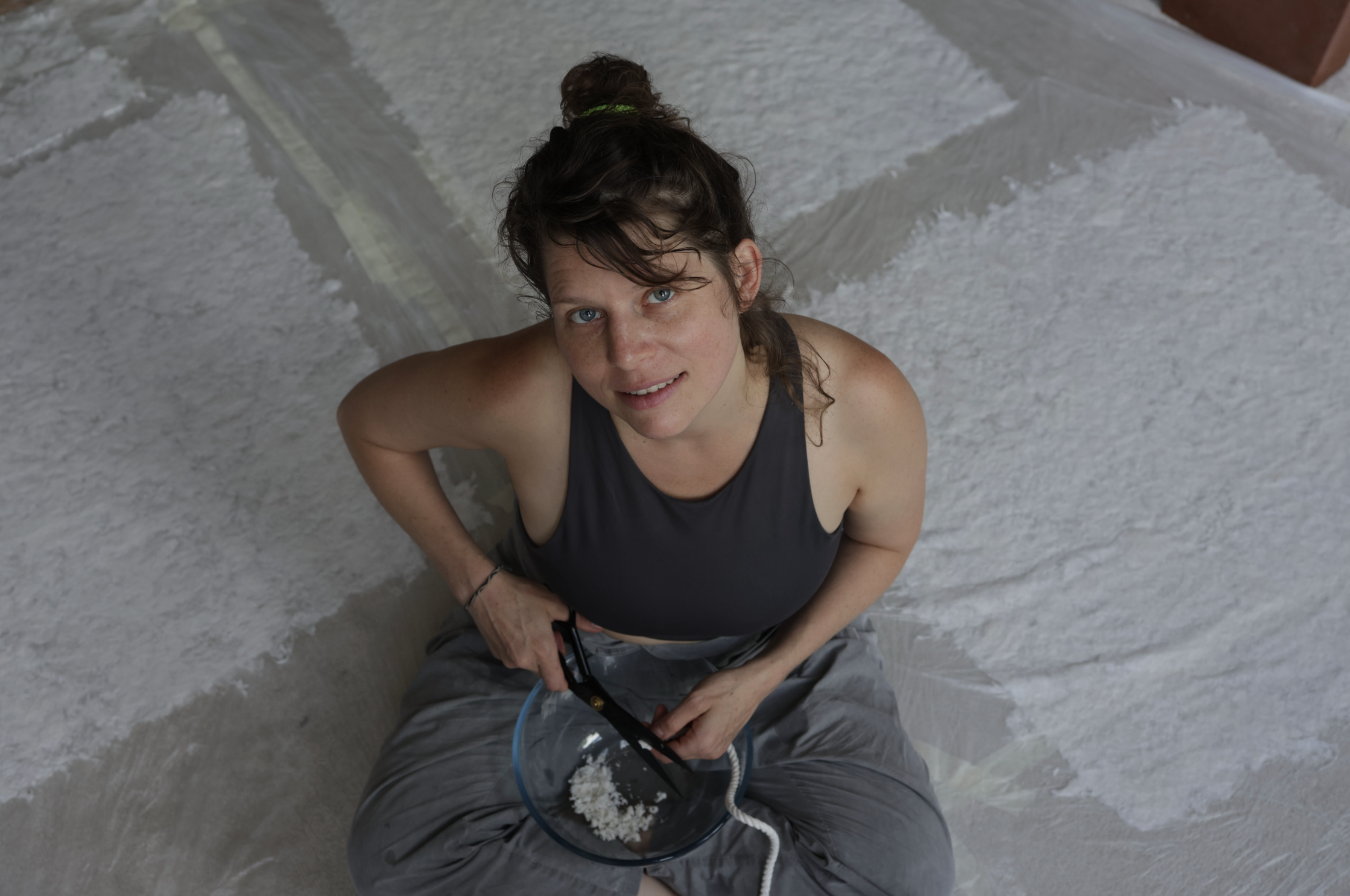
An engagement-based installation inviting visitors into one-to-one encounters. Handmade paper, created from recycled cotton ropes sourced from one of the UK’s oldest rope manufacturers, reflects the fragile and time-intensive nature of human relationships. Letterpressed texts, drawn from interviews with the sculpture cohort around the question “What is intimacy?”, transform the work into a collective portrait and a shared emotional archive. proposing intimacy, slowness, and human connection as urgent acts of resistance today and a necessary condition for human connection today.
Alphabet of {0, 1}
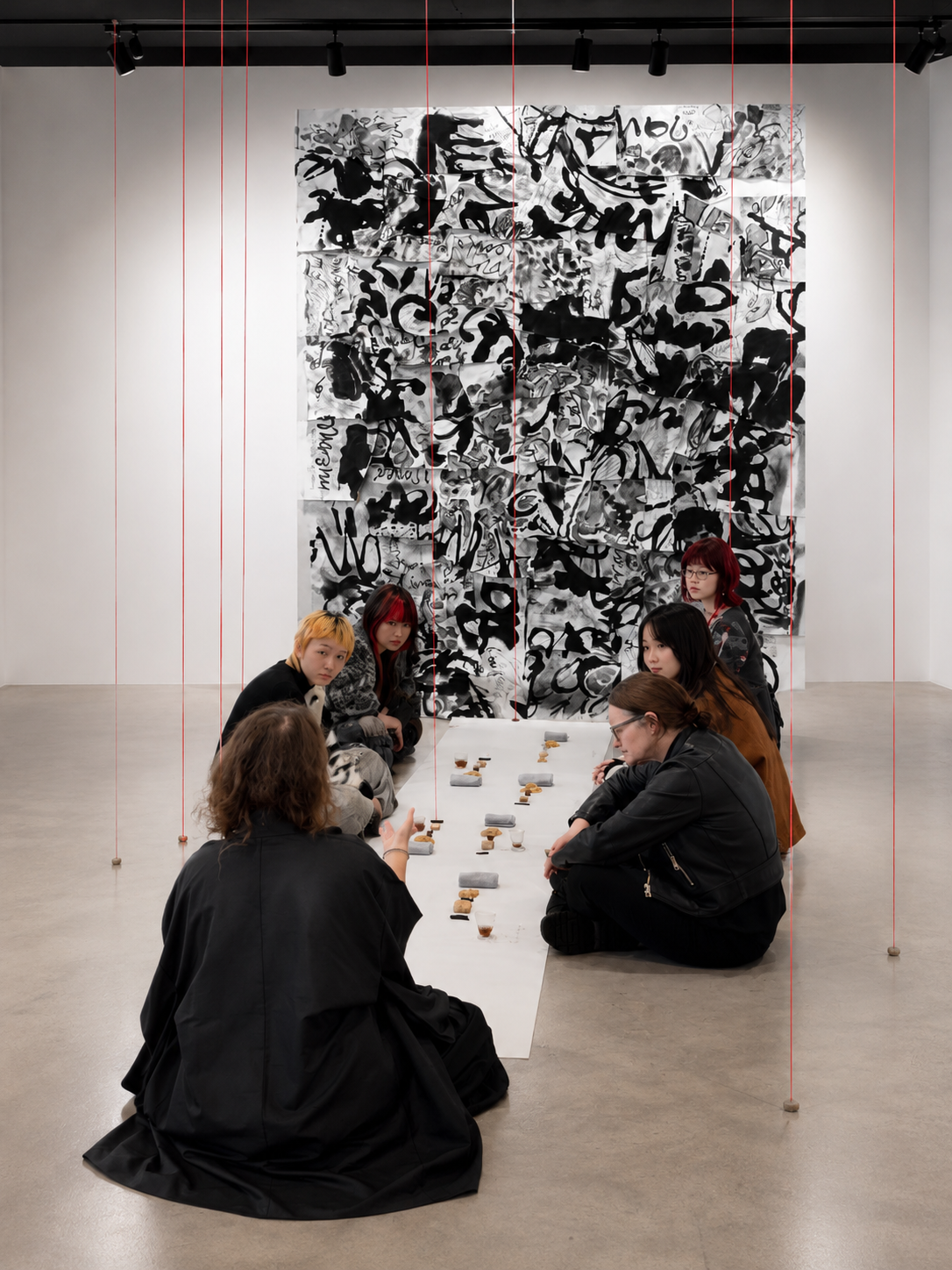
An installation and interactive performance structured around environment-building, video documentation, and live audience participation.
The research drew on three perspectives—Dzogchen philosophy, quantum physics, and Kolmogorov’s probability theory. I aimed to open a conversation about randomness and free will (in spiritual terms), not as abstract concepts but as personal experiences generated through audience engagement during the performance.
The process began with intuitive mark-making to simulate the randomness of creation, followed by the improvisational deconstruction and reconstruction of fragments within new boundaries, symbolizing universal structures and laws.
Participants were invited to experience the work on a multisensory level—through smell, touch, sound, breath, and taste—allowing them to “see” through alternative sensory pathways.
INTERCONNECTIVITY
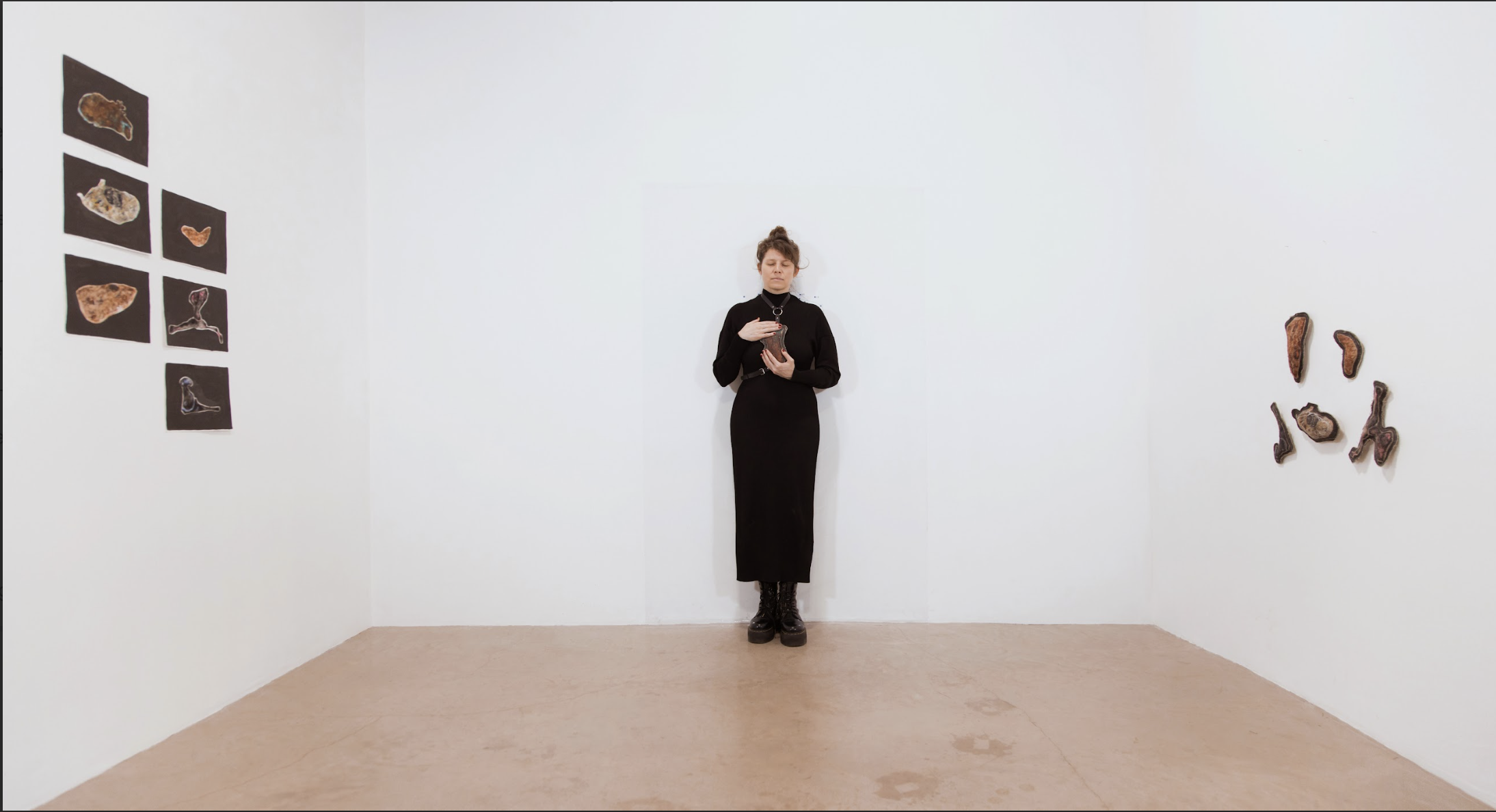
An installation where tactile, handcrafted elements contrast with the sterile aesthetics of clinical and institutional spaces. Through physical interaction, the work proposes an alternative form of embodied knowledge and collective healing. In doing so, it reconnects contemporary experience with ancestral and communal practices of care.
HER
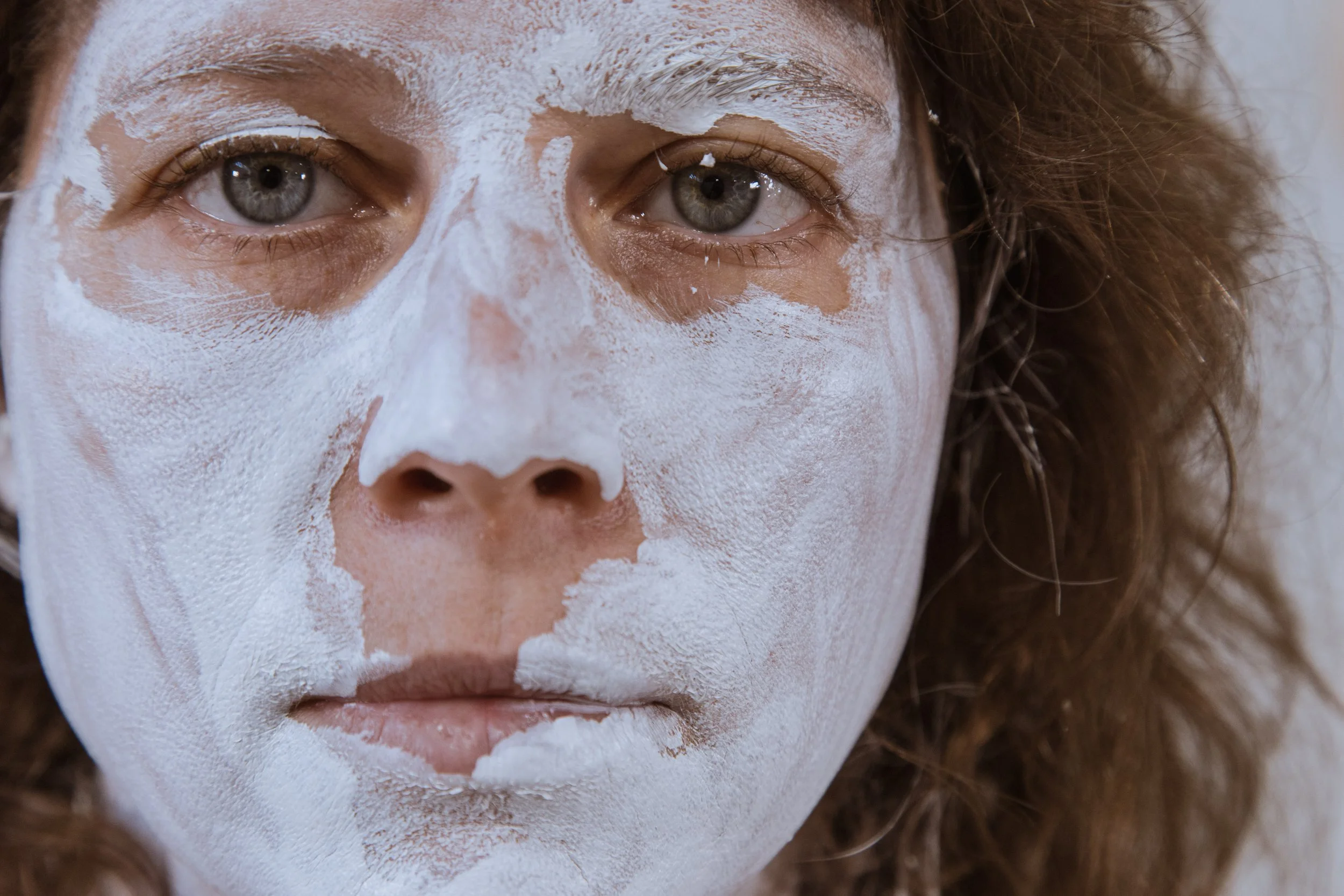
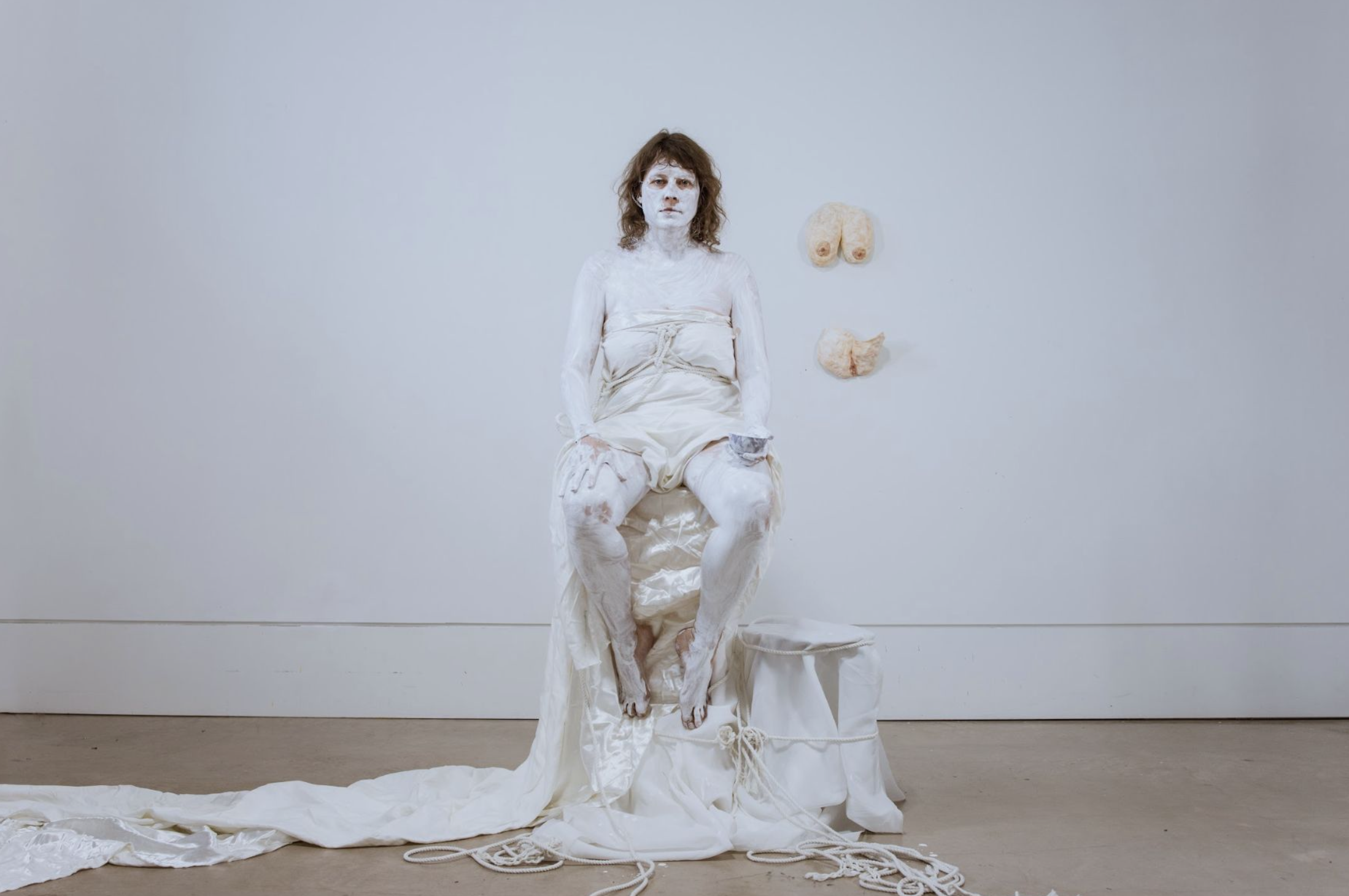
An experimental installation incorporating a live performance designed to engage directly with the audience. The work was structured around a silent exchange: I maintained eye contact with viewers while applying paint to my own body. In the future, I intend to extend this dynamic by inviting the audience to participate in the act itself.
As an artist and student at the Royal College of Art, I question the parameters of the studio environment: what constitutes a studio, and where do its boundaries lie? The work interrogates authorship and embodiment—who, or what, becomes the sculpture? Can the artist’s body itself function as a sculptural form?